
After a busy few months finishing off my fourth book (more on that later this year!) I am excited to finally be back to writing on Just History Posts. And we start the year with a great interview from a perspective we haven’t yet heard on the blog, that of a filmmaker.
Leon Mitchell is an award-winning British author and director recognised for his interdisciplinary approach to storytelling and the human experience. He is one of the UK’s most decorated independent creatives, winning over 50 international film awards and receiving 18 nominations. In his work and writings, he delves into the Psychology of Imagination and the role of the Default Mode Network—the brain’s “storytelling” centre—in how we perceive our past and construct our future. This year, Leon is releasing a dual documentary and fiction novel about the life of Empress Matilda. Matilda was the heir of Henry I and attempted to claim the English throne in her own right in the 12th century, leading to a Civil War known as The Anarchy, which I have written about before. It was very interesting to chat to Leon, so let’s get started!

Welcome to the blog, Leon! The realm of historical storytelling is something of a departure from your other films, many of which are fiction works for children and young adults. What made you want to turn to a historical setting?
I am always looking for a great story to tell, and I have always enjoyed watching shows like The Last Kingdom, Vikings, and Game of Thrones. I fell in love with the human story throughout those eras and started researching more about history. I know shows are often dramatised, and I wanted to know more real-life context. So, I went down a rabbit hole, and I was absolutely blown away.
In one of my brainstorming sessions, I created the concept of a woman fighting for a crown that had been taken from her. While researching, I discovered Empress Matilda; I was in awe of her story and how similar it was to the idea I had. Later, when I was in a place called Wallingford, I discovered more about the treaty and the direct connection to Matilda. It felt as though I was receiving a signal because everything kept pointing to her story. Until that point, I didn’t even know about Wallingford—and yet, there I was, visiting the town where the turning point of the Anarchy happened. So my original idea, became the story of Empress Matilda through connection and experience.
Had you even undertaken historical research before, and if not how did you find the process?
I’ve always been fascinated by history, but this was my first real deep dive into the historical world—and what a world it is. Now I’m completely immersed in it and want to find out more. Wherever I go now, I look up more; I notice more buildings, architecture, churches, and hidden secrets all around us. It’s truly a breathtaking experience and also teaches us so much about ‘the now’ and ‘our future’.
Matilda is definitely such a fascinating character – what was it in particular that drew you to her story?
It was her courage that truly defined her. In a time when no one was coming to her aid, she escaped from Oxford Castle in the bitter snow and eventually returned to fight for her crown, forever altering the course of the royal bloodline. It is a testament to the inner strength of a woman. To me, she stands out as a singular figure in history—a truly formidable force. Her story is both touching and haunting. As soon as I discovered her, I knew I had to be her voice.
You have degrees in Psychology, and wanted to leverage this to look not just at the story of Matilda’s life, but at the social and mental aspects of being a woman trying to claim a throne at this time. How did this insight change your approach?
This was the most important part of telling her story. I wanted to write it so the reader could truly feel what it was like inside her mind. It would have been too easy to simply produce a recreation of historical texts; instead, I wanted to provide a raw, emotional look at her life through the lens of a story.
The biggest shift was that I was writing for her—in a sense, inhabiting her mind, becoming her voice, and telling her story from within. I viewed myself as an extension of her life, bringing her experiences into the modern world. I believe she deserves to have her story told this way, infused with a cinematic essence. When you read this book, the goal is to submerge you in her existence, as if you are her.
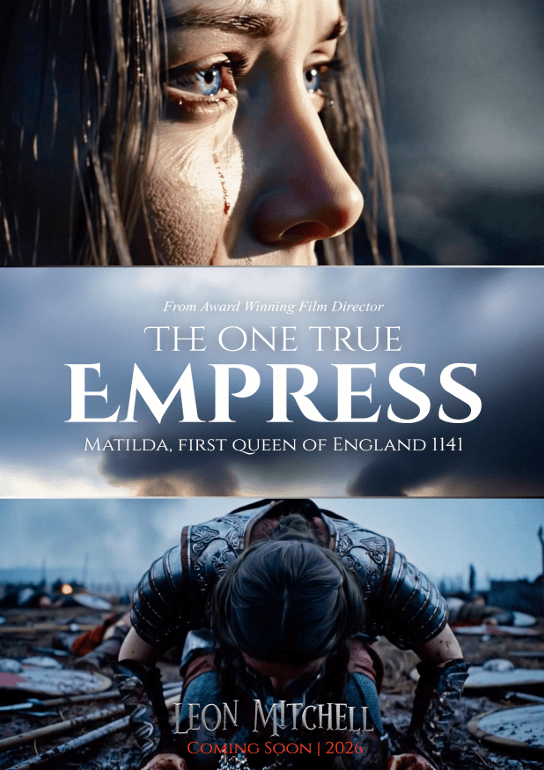
It’s quite unusual to release a book and documentary at the same time – what made you decide to do this?
It was about doing Matilda justice and ensuring we covered as much of her story as possible; a book simply wasn’t enough. We felt that having the ability to give this story a visual element made sense, too. Consequently, my long-term collaborator, Peter Darnes, came on board very quickly. He is a brilliant storyteller who saw the potential; he loved the story and believed in it from the start.
We then had the pleasure of historian Sharon Bennett Connolly joining the team to provide historical context and feature in the documentary—that was a no-brainer. We also have a very talented actress and presenter, Chloe Wainwright, who will host the film. The documentary is an exciting prospect, as it allows us to visualise Matilda’s life and bring her back to a space where people can truly see her.
It sounds like a great team. You chose to make the book a fiction novel, in contrast to the documentary (though the latter still has dramatic elements). Why did you choose to do them this way round? And how do you feel the two can complement each other?
I believe that to honour Matilda, I had to write in a way that truly did her justice; the only way I can achieve that is through my own method of storytelling—through human connection. That comes from blending a cinematic experience on the page, infused with a poetic sensibility and a deep psychological focus.
I also felt that while there are already accounts of her life in existence, they tend to focus on dates and historical context. I wanted to bring her to life as a human being and give the reader something to feel deeply. To achieve that level of intimacy, it could only be told through fiction.
It must have been a really fun project to work on. What was your favourite part about the process?
Strangely, I discovered a lot about myself through this process. I connected deeply with this story and realised further how vital it is to always believe in your truth. I have also thoroughly enjoyed breaking the rules whilst writing it; for example, I have filled in certain blanks with what I feel would have happened, or how the experience would have been felt. I wanted to fill this book with a real sense of purpose.
I have endeavoured to honour the historian community and remain accurate to historical accounts. However, I have equally told the story of how I perceive Empress Matilda, using my knowledge of psychology to truly tune in to what she would have felt.
Did your opinion of Matilda change throughout the process?
It never did; it never wavered, because I see her in my own unique way. I would say the more I learned about her, the closer I became to her story. I feel privileged to be able to act as her voice over 800 years later, and I have not held back at all.
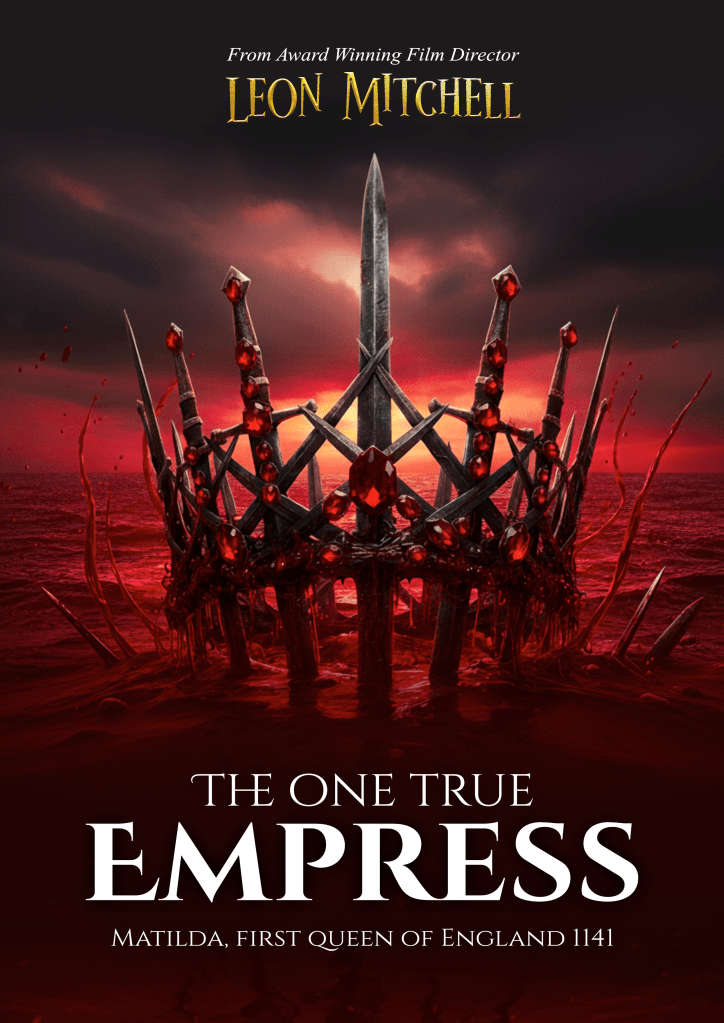
What advice would you give to anyone interested in creating a historical documentary?
This is such an exciting question for me because I approached this with no experience within the historical community or historical research. But that allowed me to be incredibly open-minded and curious, and it let my imagination run wild. I quickly noticed that there were also so many gaps; for a person like me who loves to read, plot, and write between the lines, it was a blessing. Because I was able to create a full narrative and fill in the blanks however I wished, it was very powerful to me.
I think my main advice would be to dive headfirst into it; there is so much out there to discover that will find a way into your heart. When you find the story that connects with you, start telling it. Use modern technology to capture what you want to say and share the passion you have. Always respect the community of historians, professionals in this field, and experts. They are really incredible people who devote their lives to preserving our incredible heritage. But also, you don’t need permission to tell a story, so just start! Don’t be afraid to think big and bring back to life the past. Once you open the door, you quickly realise that England has a very surprising history indeed, it’s a playground full of stories, full of all sorts of wonders.
A huge thank you to Leon Mitchell for talking to us today about his project. Matilda is such a fascinating figure, and one who deserves to be more widely known, and so I am looking forward to seeing what he and his team have created. Pre-orders for the book will be open from the end of May, and the book will be released in October in paperback and kindle. The documentary will similarly be out towards the end of the year. You can keep up-to-date with Leon and his project through his various channels found here.
Previous Blog Post: A Brief Moment of History: King John and the Lost Crown Jewels
Previous in An Interview With: Victoria Panton Bacon, Second World War Historian
You may like: The Anarchy: England’s Medieval Civil War
List of Blog Posts: here Blog Homepage: here
Buy my books via the pictures below! Or why not check out our shop?


Follow us:


 Just History Posts