As I’m getting back into the groove with blogging after my book hand in, I thought I’d turn back to one of my favourite series, A Brief Moment of History. I was listening to a podcast recently which was talking about famous cons, and the story of the world’s smallest skyscraper was recounted. Fascinated by the tale, I had to do some digging, and it is certainly a fun one. A big thank you to Thicket for sponsoring this blog post (more details at the end).
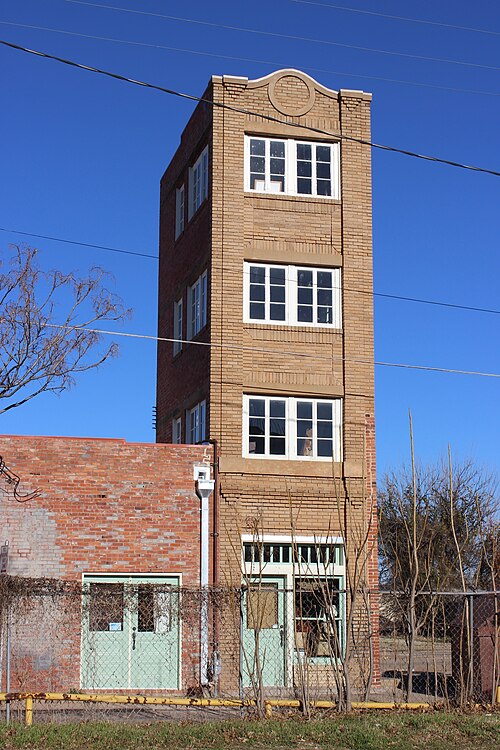
Oil has been one of the biggest motivators the world over for close to two centuries, and America is one of the most well-known countries which had a huge oil boom, immortalised in media through shows like Dallas. In Texas, where Dallas was set, this boom began at the turn of the 20th century when an unprecedented oil reserve was discovered at Spindletop, Beaumont, in January 1901. Investors poured into the area in an attempt to find their own fortunes. Most pertinently for our story, in 1912 a large source of oil was found near Burkburnett, a small town in Wichita County. People flooded into the region from far and wide to exploit this liquid gold.
The area was not used to such huge swathes of people. Some development was already underway, with Wichita Falls – the county’s seat – already having a railway line going through it and important families such as the Newby family championing the town’s interests, but there were only around 8,000 people living there. As oil brought more and more people, there was a sudden need for vast investment in infrastructure. Houses and offices needed to be built.
The Newby family owned a plot of land near to the railroad depot in Wichita Falls, where they had built a two-room building which was rented out to numerous businessmen as their offices. In late 1918, a man named J D McMahon became one of these renters. It was not long before the businessmen who shared the office with McMahon heard about his latest venture. He was going to build a huge skyscraper, equipped with offices, shops and flats, to cater to this influx of people to the region. Investors poured in, sure of the success of such a project. The location was perfect: right across the street from the St James Hotel, which was already a highly successful business, and in handy reach of the railway line.
With $200,000 in stock sold (the equivalent of several million today), building work began, and McMahon left town. On the Newby plot, next door to the two-room office, builders swiftly came and went. In their wake, they left a very odd building indeed. It was four floors high, with incredibly small dimensions. The stairs between floors were all but ladders, and the ground floor had no windows, with the other floors having just one large window each. Investors began to ask questions. Where was the huge skyscraper whose plans they had seen?
After some investigating, it became clear that everyone had been duped. The building measured 480 feet high, with sides not even 20 feet in length. Turning back to the plans, a tiny, but vital, detail was spotted. The measurements had been recorded in square inches, rather than feet (written as “ as opposed to ‘) – this one additional line on the page completely transformed the luxury high-rise into a joke of a building. According to legend, the investors attempted to sue McMahon but were unsuccessful as he had built the building to the agreed specifications. It was their fault for not reading the plans properly.
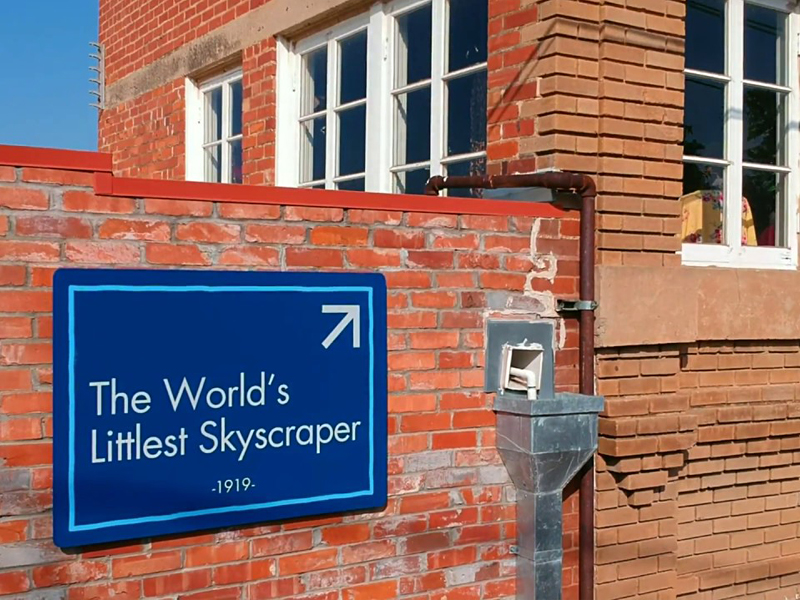
In order to not let the building go to waste, some businesses moved into the tiny rooms and used it through the 1920s, and word of the con spread. It apparently soon gained its nickname as ‘The World’s Littlest Skyscraper’ through the column of Robert Ripley’s Believe It Or Not! magazine. But as the 1930s arrived, the Great Depression hit and some of these businesses had to move out. Then, a fire struck in 1931, from which point the building was apparently largely abandoned, though eventually as the economic situation improved, various businesses moved in and out.
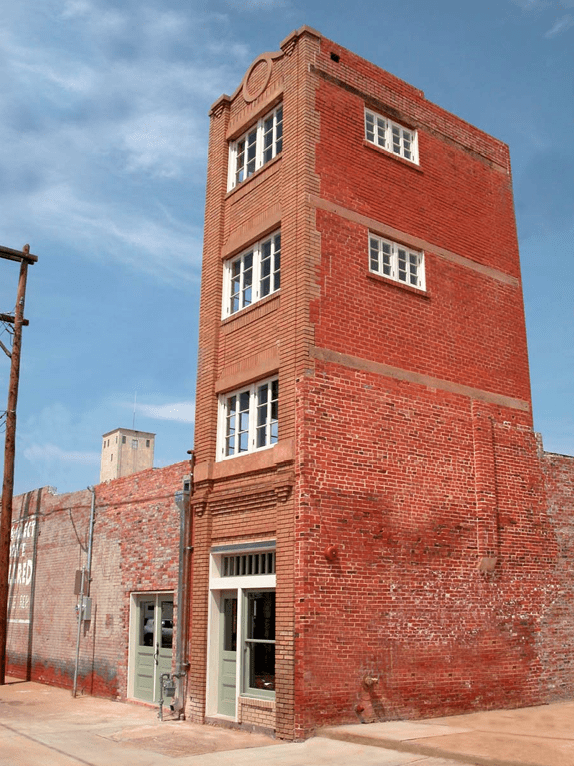
What had become known as the Newby-McMahon building eventually became property of Wichita Falls, and its demolition was proposed several times, but by now the city’s inhabitants had become fond of their strange little building and objected strongly enough each time to save it. By the mid-1980s, however, it was in such a bad state of repair that the city instead handed it over to the county’s heritage society in the hope of restoring it, but the amount of money needed to do so proved difficult to find for a small society. Finally, as the new millennium arrived, hope came anew. An architectural firm, Bundy, Young, Sims & Potter, stabilised the building at the request of the council, and they were so charmed with the building that they went into partnership with Marvin Groves Electric in order to buy and fully restore the building at a cost of around $200,000 – poetically, about the same amount that McMahon raised almost a century earlier (though, of course, not worth the same).
Soon after its restoration, a local antique dealer leased the building for her business, with her and her husband undertaking research to verify the claim that its name came from Ripley’s magazine. Today, there is still an antique shop within (though run by a different owner) which welcomes tourists and lets them climb to the top, regaling them with the building’s history.
It has proven rather difficult to verify most of the details of this local legend. The Wichita Falls official website has two versions of the tale (here and here) with varying details, but no references. The majority of other articles written about it repeat much of the same information, although a local newspaper adds some extra details about what happened to the building after McMahon skipped town. A 2008 news article mentions the quest to verify the claim that it featured in Ripley’s comic, though I haven’t been able to find anything from a later date which explains whether this was indeed found or not, and I do not have access to any of these comics here in the UK to check myself. Those who reference there being a court case which ruled in McMahon’s favour provide no details on a date that this may have happened, who the judge was, or any other details that can confirm this truly did take place.
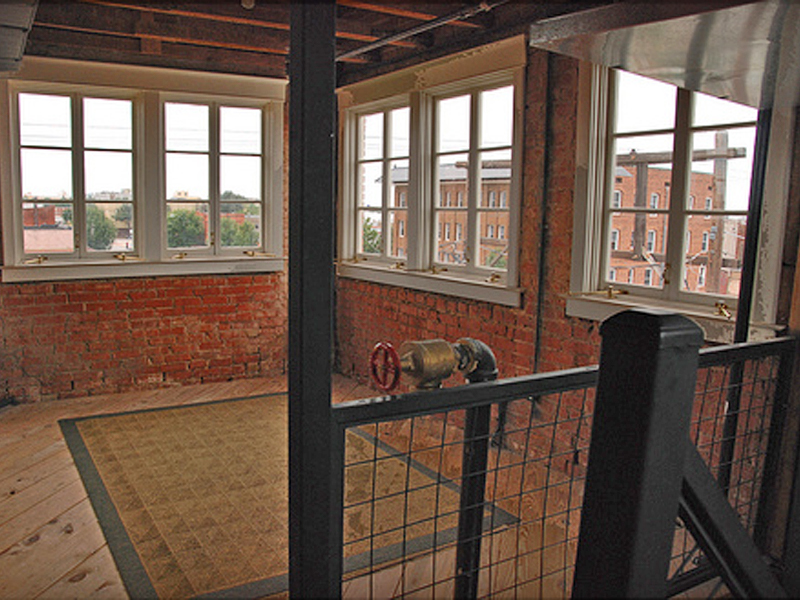
It seems that the majority of this story has come down through local legend and storytelling. If anyone comes across any sources which are more contemporary, or can verify any of the details it would be greatly appreciated! But of course, just because the story has come to us through generations of word-of-mouth does not mean it is not based in truth. And it is certainly a charming little tourist attraction. The world’s littlest skyscraper, then, is an enigmatic character, its secrets as unusual as its construction. But if you ever find yourself in the area, you will have to climb the staircase, which takes up so much of the floorspace, all the way to the top, and put a pin in the world map of visitors, to show that cons can sometimes become amusing anecdotes many years down the line.
Thank you to Thicket for sponsoring this blog post. Thicket is an upcoming online learning platform which hosts live classes in history and the humanities, led by experts. It is designed for casual learners who want to explore the humanities in a fun, no-pressure environment.
Previous Blog Post: An Interview With: Leon Mitchell, Filmmaker and Author
Previous in A Brief Moment of History: King John and the Lost Crown Jewels
List of Blog Posts: here Blog Homepage: here
Buy my books via the pictures below! Or why not check out our shop?


Follow us:


Read more:
https://tn-roots.com/Clay/Obits/wichita-obits-1909.htm
https://web.archive.org/web/20110613195932/http://www.timesrecordnews.com/news/2002/dec/08/about-us/
https://www.wichitafallstx.gov/DocumentCenter/View/19745/Smallest-Skyscraper?bidId=
https://discoverwichitafalls.com/destination-item/worlds-littlest-skyscraper/
https://texascooppower.com/legend-of-the-worlds-littlest-skyscraper/

