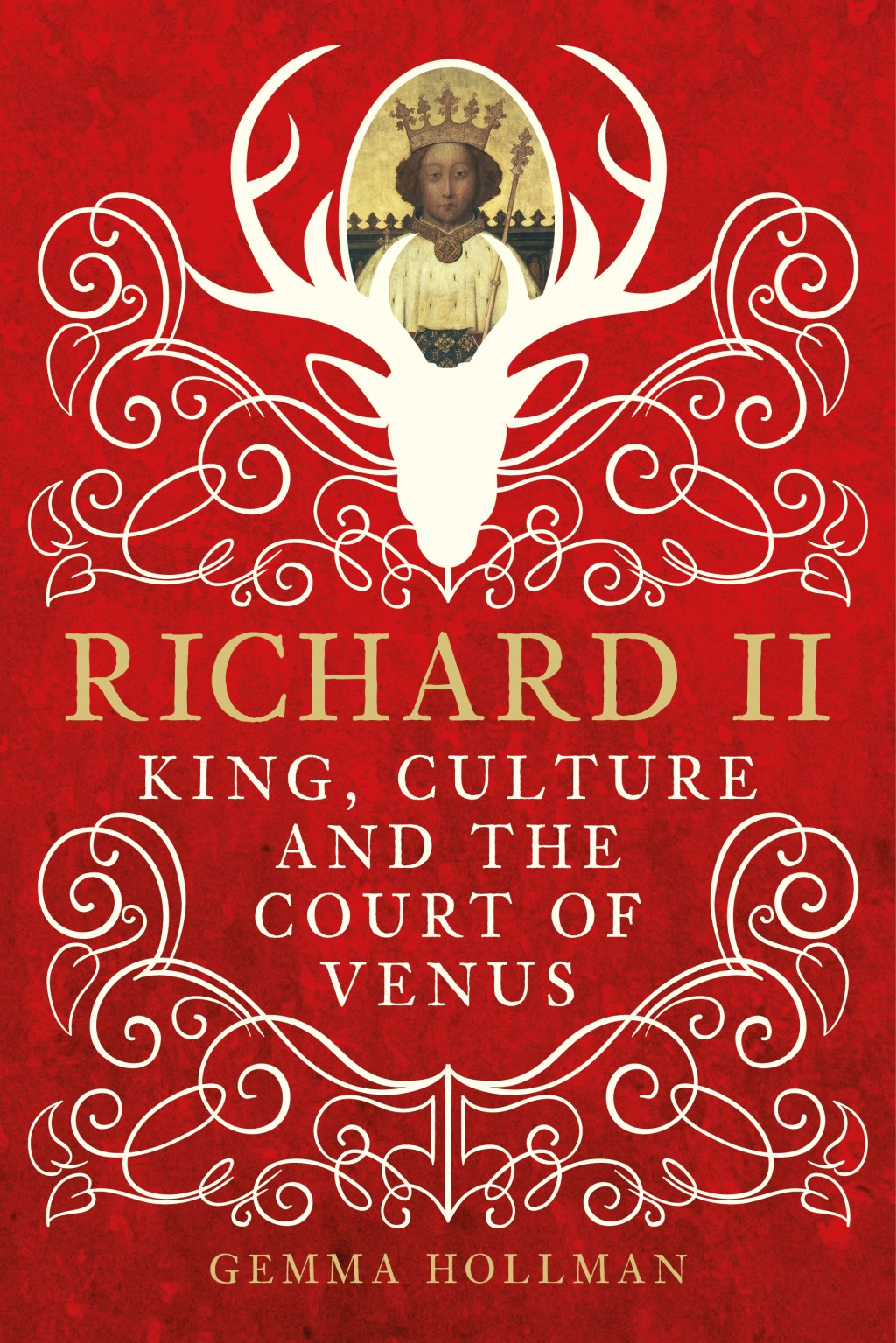
I am so excited to reveal the cover for my fourth book, Richard II: King, Culture and the Court of Venus! This book has been many years in the making, and I’ve given brief, periodic mentions of it before, so I am pleased to be able to finally give you the full run-down.
All of my previous books have been focused on medieval women, and so this book is a slight departure for me, being centred on a king. But women were actually at the heart of my attraction to Richard II. Whilst researching the Ladies of the Garter for another project, I was surprised to find how the majority of women bestowed this honour in the medieval period received the position under Richard. A little more digging revealed a plethora of women at Richard’s court throughout his reign, wielding a lot more power than you might expect; several women were officially banished from court during a tumultuous period in Richard’s reign.
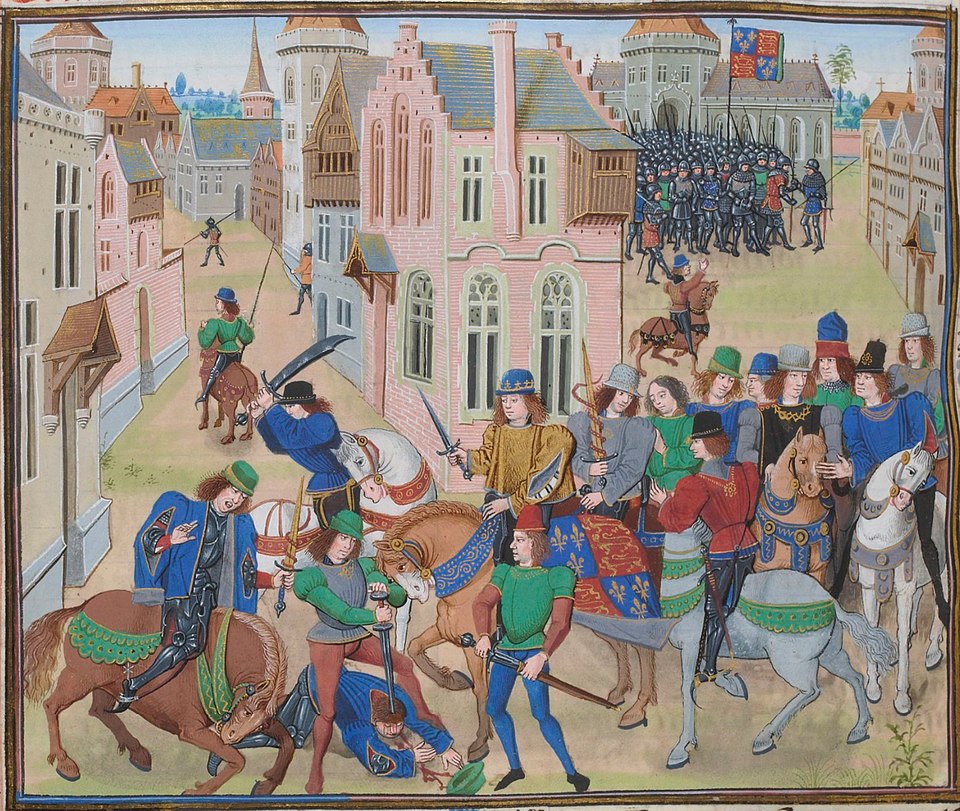
This officially piqued my interest in Richard. Why was he so fond of women, and how were they able to carve out such a political bubble at this time? I found an incredibly fascinating story within. Growing up in the south of England, the Peasants’ Revolt was widely taught, and is probably the most memorable part of Richard’s reign. Second most infamous, of course, is that he was eventually overthrown by his cousin, the future Henry IV. But what happened in between these two events is surprisingly less known. Despite these two fundamental points in history, Richard II is something of a hidden king, overshadowed by his relatives: his grandfather Edward III, who started the Hundred Years War; his father, later known as the Black Prince, famed for his military prowess; his cousin’s son, Henry V, hailed for his victory at Agincourt.
Richard was no warrior king. He did not necessarily shy from fighting quite as much as has previously been portrayed, but he was not interested in waging long, bloody battles and conquering his foes. Instead, Richard was interested in culture, refinement and luxury. His father-in-law’s cosmopolitan Bohemian court was his inspiration. He wanted to be an emperor, surrounded by beautiful women, stunning palaces, the most sumptuous clothes, and subjects who adored and exalted him.
Richard came to the throne as a young child and was brought up being told by everyone around him that he was chosen by God to lead the English to a new golden age. This fundamentally impacted his world view and approach to power. His youth was constantly held against him, with the men at court who disagreed with his plans using it to wrestle control. His close friends, who partied long into the night with him, were derided as “knights of Venus” who had “more prowess in the bedroom than on the field of battle”, and the prevalence of women did little to help this reputation.
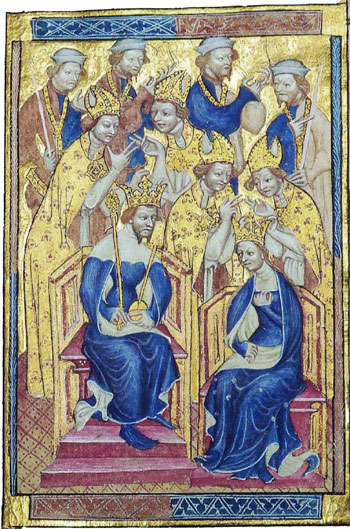
Ultimately, Richard descended into a tyranny, hell-bent on enacting revenge on his enemies and trying to claim absolute power. This was to be his downfall. Today, he is perhaps better known through Shakespeare’s plays. In Richard II: King, Culture and the Court of Venus, I try to take a different look at this king, by turning to his wider court. Whilst in essence a biography, at times we turn our attention to other key figures of Richard’s court, looking at the role of women and household knights, the influence of Richard’s family, and how the Hundred Years’ War impacted religion and foreign policy. Through understanding these wider puzzle pieces, we can understand Richard better, and how his reign devolved so extremely.
If this all sounds tantalising to you, then it is available to pre-order from Amazon and bookshops now! And I look forward to sharing more with you. Thank you for all of your support.
Previous Blog Post: A Brief Moment of History: The World’s Littlest Skyscraper
You may like: Women in the Middle Ages
List of Blog Posts: here Blog Homepage: here
Buy my books via the pictures below! Or why not check out our shop?


Follow us: